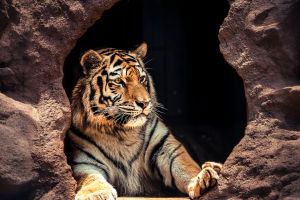
We explore the lion, known as Panthera leo, one of the most powerful big cats in the world. It lives mainly in sub-Saharan Africa and a small area in western India. This animal plays a key role in natural ecosystems as a top hunter.
The lion has strong muscles, a broad chest, a round head, and short rounded ears. The tail ends with a dark tuft of hair. Male lions usually grow a thick mane around their head and neck. This mane makes them look larger and stronger. Female lions are smaller and do not have a full mane.
Habitat and Distribution
We find lions living in grasslands, savannas, and open bush areas. These spaces allow them to see prey from a distance and move freely. In the past, lions lived across Africa, Europe, and Asia. Their range was much wider than today.
Over time, human expansion reduced their living space. Farming, settlement growth, and land use change pushed lions into smaller protected areas. Today, most wild lions survive inside national parks and reserves. A small population also lives in India.
Physical Features
We notice that lions have powerful bodies built for strength and speed. Their jaws are strong, and their teeth help them tear meat. Sharp claws support them during hunting and fighting.
The mane of a male lion protects the neck during battles with other males. It also signals health and strength. A darker and fuller mane often shows better fitness. Lions use body posture, sound, and scent to communicate with each other.
Diet and Hunting Skills
We know lions as carnivores. They mainly hunt medium and large hoofed animals such as antelope, wildebeest, and zebra. Sometimes they also catch smaller animals when needed.
Female lions usually lead the hunt. They move quietly and work as a team to surround prey. Cooperation increases their success rate. After a successful hunt, the pride shares the meal. Males often eat first because of their size and status.
Lions may hunt during the day or at night. When human activity increases in an area, they often adjust and become more active at night to avoid conflict. This ability to adapt helps them survive in changing environments.
Social Structure and Pride Life
We see that lions live in groups called prides. A pride usually includes related females, their cubs, and one or more mature males. Females typically stay in the same pride for life.
Male lions compete with other males to gain control of a pride. When a new male takes over, fights can occur. The new leader may remove cubs from the previous male to increase his own breeding chances.
Living in a pride gives protection and cooperation. Females raise cubs together and protect them from danger. Cubs learn hunting skills by watching the older lions. Group life improves survival chances for young lions.
Conservation Status and Threats
We understand that lion populations have declined over the past decades. Habitat loss, conflict with people, and illegal hunting are major threats. When wild areas shrink, lions lose prey and space to live.
The International Union for Conservation of Nature lists the lion as vulnerable. Conservation programs focus on protecting habitat, reducing conflict, and managing protected areas. Education and cooperation with local communities also play an important role.
Without strong protection, lion numbers may continue to drop. Conservation efforts aim to maintain healthy populations for the future.
Cultural Importance
We see lions in art, flags, literature, and films around the world. Many cultures view the lion as a symbol of power, courage, and leadership. Its image often represents strength and authority.
Zoos have kept lions for centuries. Since the late 1700s, they became popular attractions in zoological parks. Today, people can observe them in safe environments while learning about their behavior and ecology.
Final Thoughts
In the end, Panthera leo stands as one of the most powerful and social big cats in the wild. Its teamwork, strength, and adaptability help it survive in challenging environments. At the same time, it faces real threats that require careful protection and attention.
We all share responsibility for protecting wildlife and preserving natural habitats. By supporting conservation efforts and respecting nature, we help ensure that lions continue to roam the wild for years to come. Lykkers, let us value and protect these amazing creatures together.