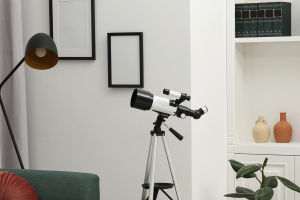
A telescope is a precision instrument that requires thoughtful care to maintain reliable performance.
Proper handling, suitable storage, and occasional cleaning can help preserve its optical surfaces and mechanical components over time.
The best maintenance approach is preventive rather than excessive. Protecting the instrument from impacts, moisture, heat, and unnecessary contact can help keep it ready for clear observations.
Handle It Properly
Always support the telescope securely when carrying or repositioning it. Use the main body or designated carrying points rather than small adjustment controls, and avoid sudden movements, impacts, and unnecessary vibration.
During observation, place the telescope on a stable mount and ensure that it is positioned securely. Keep surrounding objects clear of the instrument to reduce the chance of accidental contact or damage.
Control Heat Exposure
Avoid leaving a telescope in strong direct sunlight or in an enclosed vehicle exposed to high temperatures. Prolonged heat can place unnecessary stress on optical and mechanical components.
After observing, move the telescope to a shaded, dry area. Allowing it to adjust gradually to its surroundings can also help minimize condensation caused by sudden temperature changes.
Store It in a Dry Environment
Choose a clean, dry, low-dust location for storage. A protective case can provide additional protection from dust, moisture, and accidental impacts.
If condensation or moisture appears after an observing session, allow the telescope to dry properly before covering it or placing it into long-term storage. Where appropriate, a suitable drying agent can help control humidity inside the storage environment.
Clean Optical Surfaces Sparingly
Optical surfaces do not need to be cleaned every time a small amount of dust appears. Unnecessary cleaning can create more risk than the dust itself, particularly when excessive pressure or unsuitable materials are used.
Use a hand-operated air blower designed for optical equipment to remove loose particles. Avoid blowing onto the lens with your mouth, as breath can introduce moisture.
Never touch optical surfaces unnecessarily. Fingerprints, rough fabrics, paper, and sharp objects can leave residue or cause damage to delicate surfaces and coatings.
When cleaning is genuinely necessary, use materials specifically intended for optical equipment and follow the appropriate procedure for the telescope. Work gently and apply minimal pressure.
Avoid Unnecessary Disassembly
Do not expose the telescope to running water unless its design specifically permits it. For exterior cleaning, use a suitable soft cloth and avoid excessive moisture around openings, controls, and other sensitive areas.
The optical system should not be taken apart without the appropriate knowledge and equipment. Removing optical components can alter alignment and may make accurate reassembly difficult.
If the telescope develops an alignment or internal mechanical problem, appropriate professional servicing is preferable to repeated adjustments without specialized equipment.
Preserve Performance Over Time
Effective telescope care is simple: handle the instrument carefully, limit exposure to heat and moisture, store it in suitable conditions, and clean optical surfaces only when necessary.
These habits help protect the telescope's precision components and support consistent performance, allowing the instrument to remain dependable for future observation.